Applying for GST registration can seem complicated when you see the GST portal for the first time.
The good news is that the process becomes much easier when you understand the sequence.
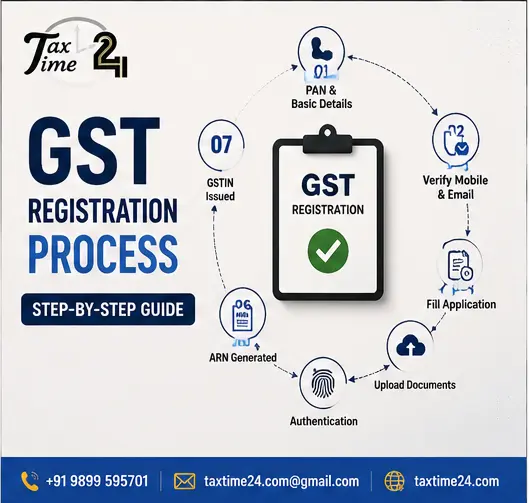
The GST registration process generally involves entering taxpayer information, verifying mobile and email details, completing the application, uploading relevant documents, completing authentication where applicable and submitting the application for processing.
This guide explains the process step by step.
What Is GST Registration?
GST registration is the process through which an eligible business or person obtains a GSTIN — Goods and Services Tax Identification Number.
A GSTIN is used for GST-related transactions, invoicing, returns and other compliance requirements.
Whether you need GST registration depends on factors such as your business activities, turnover, nature of supplies and applicable GST provisions.
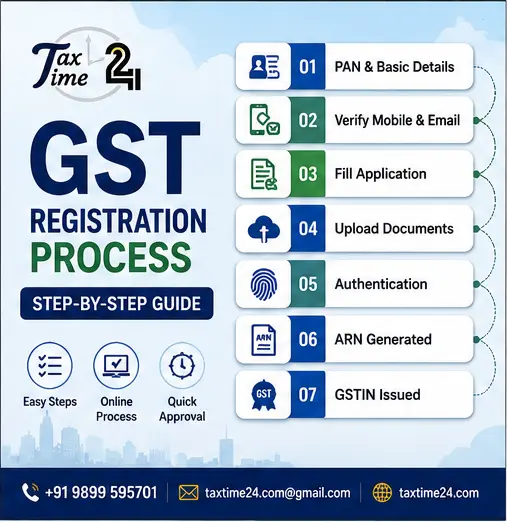
GST Registration Process – Step by Step
Step 1: Keep Your Documents Ready
Before beginning the application, collect the required documents.
Depending on your business structure, these may include:
- PAN
- Aadhaar or identity details
- Photograph
- Business address proof
- Rent or lease agreement where applicable
- Consent letter where applicable
- Business constitution documents
- Authorised signatory details
- Bank account information where required
You can check our complete GST Registration Documents Checklist.
Step 2: Visit the GST Portal
Start the registration process through the official GST portal.
You will need to provide basic information about the taxpayer and business.
Step 3: Enter PAN and Contact Details
The initial registration stage requires basic details such as:
- Legal name
- PAN
- State
- District
- Mobile number
- Email address
The contact details are verified using OTP.
Step 4: Generate the Temporary Reference Number
After successful verification, the portal generates a temporary reference number or TRN for continuing the registration application.
Keep this information safely because you can use it to resume the application.
Step 5: Complete the GST Registration Application
Use the TRN to access the application and complete the remaining sections.
Information may include:
- Business details
- Promoter/partner/director details
- Authorised signatory
- Principal place of business
- Additional places of business
- Goods and services
- Bank details
- State-specific information where applicable
Step 6: Upload Required Documents
Upload the relevant supporting documents.
Make sure that:
- Documents are clear
- Names match the application
- Address details are consistent
- Files meet portal requirements
Incorrect documentation can result in clarification requests or delays.
Step 7: Complete Aadhaar Authentication Where Applicable
Depending on the applicant and current GST portal process, Aadhaar authentication may be required.
The authentication process can involve OTP-based authentication or biometric/document verification in applicable cases.
For this reason, it is important to monitor the application after submission and complete any authentication requirement within the specified period.
Step 8: Submit the Application
After completing the required sections and verification, submit the application using the applicable authentication/signature method.
For certain business entities, such as companies, digital signature requirements may apply.
Step 9: Receive the ARN
After successful submission, an Application Reference Number (ARN) is generated.
The ARN can be used to track the status of the GST registration application.
Step 10: Application Processing
The application is then processed by the GST authorities.
The application may be approved if everything is in order.
If clarification or additional information is required, the applicant may need to respond through the GST portal.
Step 11: GSTIN Is Issued
Once the application is approved, the applicant receives the GST registration details, including the GSTIN.
The taxpayer can then access the GST portal using the registered credentials.
How Long Does GST Registration Take?
The processing time can vary depending on the application and whether additional verification or clarification is required.
A straightforward application with complete and consistent documentation is generally easier to process than an application requiring clarification.
Therefore, don’t assume that every application will take exactly the same amount of time.
Common GST Registration Mistakes
Incorrect PAN Details
Always verify PAN information before submitting the application.
Address Mismatch
The address entered in the application should correspond with the supporting documents.
Poor Quality Documents
Blurry or incomplete documents can create problems during verification.
Incorrect Business Constitution
Make sure you select the correct business structure.
Ignoring Authentication
If Aadhaar authentication or another verification step is required, complete it within the applicable timeline.
Not Checking the Portal After Submission
Don’t assume the application is finished once you click submit.
Check the application status and any communication from the GST authorities.
GST Registration for Different Businesses
The process has common steps, but the documents and information vary depending on the business.
You can explore:
- GST Registration for Sole Proprietorship
- GST Registration for Partnership Firms
- GST Registration for Private Limited Companies
- GST Registration for E-commerce Sellers
What Happens After GST Registration?
Getting a GSTIN is not the end of your GST responsibilities.
Depending on your registration and business activities, you may have ongoing requirements such as:
- Issuing GST-compliant invoices
- Maintaining records
- Filing applicable GST returns
- Paying GST where applicable
- Maintaining accurate business information
The exact compliance depends on your taxpayer category and activities.
GST Registration Process – FAQs
Can I apply for GST registration online?
Yes. GST registration applications are submitted through the GST portal.
What is a TRN?
TRN stands for Temporary Reference Number. It allows you to access and continue your GST registration application.
What is an ARN?
ARN stands for Application Reference Number. It is generated after successful submission and can be used to track the application.
Is Aadhaar authentication required?
Aadhaar authentication requirements depend on the applicant and the current GST registration process.
What happens if GST registration documents are incorrect?
The GST authorities may request clarification or additional documents. Incorrect information can delay the application.
What happens after GST registration?
Once approved, the taxpayer receives the GSTIN and must follow the applicable GST compliance requirements.
Need Help With GST Registration?
If you are unsure about the GST registration process or documentation, getting the application checked before submission can help avoid unnecessary delays.
Explore TaxTime24 GST Registration for professional assistance.
Important Note
GST procedures and portal requirements may change from time to time. Always verify the current requirements applicable to your business before submitting an application.