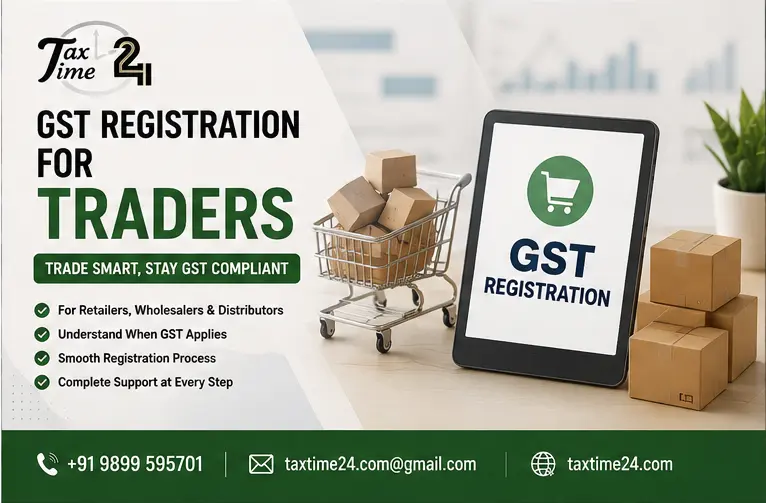
Trading businesses are among the most common types of businesses operating in India.
A trader may operate a retail shop, wholesale business, distribution business or online trading operation.
But does every trader need GST registration?
Not necessarily.
GST registration depends on factors such as turnover, the nature of supplies, location of the business, interstate transactions and other applicable provisions.
This guide explains GST registration for traders and the key things a retail or wholesale business should understand.
Who Is a Trader?
A trader generally purchases goods and sells them to customers or other businesses.
Examples include:
- Retail shopkeepers
- Wholesalers
- Distributors
- Dealers
- Stockists
- General merchants
- Online traders
- Businesses selling goods through marketplaces
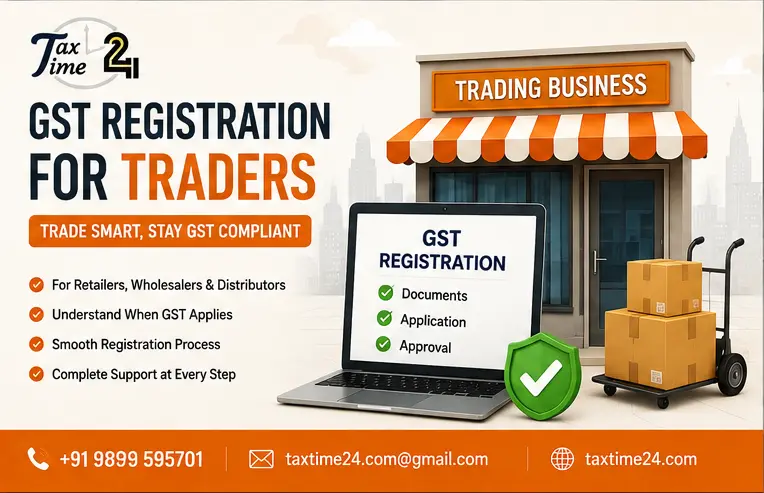
When Does a Trader Need GST Registration?
GST registration may be required when the trader meets the applicable registration conditions.
The assessment can depend on:
- Aggregate turnover
- Nature of goods
- State of operation
- Interstate supplies
- E-commerce activities
- Specific compulsory-registration provisions
- Other applicable GST rules
Traders can also refer to the official GST Registration Rules for the applicable registration provisions. Therefore, a trader should assess the actual business circumstances instead of assuming that registration is always mandatory.
GST Registration Threshold for Traders
The applicable threshold depends on the nature of supplies and the relevant GST provisions.
There can also be differences depending on the state and circumstances.
Because thresholds and exemptions can change, traders should verify the current rules applicable to their business before relying on a specific turnover figure. For official clarification on GST registration thresholds and compulsory registration, refer to the CBIC GST FAQs.
The registration threshold can vary depending on the nature of supplies, State or UT and other applicable provisions, and certain compulsory-registration situations can apply regardless of turnover. Traders should therefore check the rules applicable to their specific circumstances.
GST Registration for Retailers
A retailer sells goods directly to consumers or other buyers.
Examples include:
- Clothing stores
- Electronics shops
- Grocery businesses
- Furniture shops
- Hardware stores
- Stationery shops
- Specialty retailers
Whether GST registration is required depends on the applicable rules and the retailer’s specific circumstances.
GST Registration for Wholesalers
Wholesalers generally sell goods in larger quantities to retailers, businesses or other buyers.
Wholesale businesses should maintain proper records of:
- Purchases
- Sales
- Tax invoices
- Stock
- Payments
- GST collected
- Eligible input tax credit
GST registration requirements depend on applicable GST provisions.
GST Registration for Shopkeepers
A local shopkeeper may operate as a sole proprietorship.
If GST registration applies, the business owner generally needs to provide relevant personal and business documentation.
Read our detailed GST Registration for Sole Proprietorship guide.
Documents Required for Trader GST Registration
Documents may vary depending on the business structure.
A proprietorship trader may commonly need:
- PAN
- Aadhaar or identity details
- Photograph
- Business address proof
- Bank details where applicable
A partnership, LLP or company may require additional organisational documents.
See the complete GST Registration Documents Checklist.
GST Registration Process for Traders
The GST registration process generally involves:
- Providing PAN and basic information
- Verifying mobile and email
- Generating a TRN
- Completing the GST application
- Entering business details
- Providing principal place of business
- Adding goods/business activity details
- Uploading documents
- Completing applicable authentication
- Submitting the application
- Tracking the ARN
- Receiving GSTIN after approval
For a detailed walkthrough, read our GST Registration Process.
GST Registration for Traders Selling Online
If a trader sells goods through Amazon, Flipkart, Meesho or another marketplace, additional GST considerations may apply.
The GST treatment of e-commerce transactions depends on the applicable provisions and the structure of the transaction.
For more information, see our broader guide on GST Registration for E-commerce Sellers.
GST Invoicing for Traders
Registered traders need to follow applicable GST invoicing requirements.
A GST invoice can contain details such as:
- Supplier information
- GSTIN
- Invoice number
- Invoice date
- Customer information
- Product description
- Quantity
- Taxable value
- Applicable GST
- Other prescribed information
Accurate invoicing is important for both the seller and the buyer.
Input Tax Credit for Traders
One of the important GST concepts for traders is Input Tax Credit (ITC).
Where applicable and subject to the relevant conditions, a registered trader may be able to claim credit for eligible GST paid on business purchases.
For example, a trader purchasing goods for resale may have GST charged by the supplier.
However, ITC should not be claimed automatically. The applicable conditions, documentation and GST compliance requirements need to be satisfied.
GST Compliance After Registration
Once registered, a trader may have ongoing GST responsibilities such as:
- Filing applicable returns
- Paying GST
- Issuing compliant invoices
- Maintaining purchase and sales records
- Reconciling transactions
- Claiming eligible ITC
- Maintaining accurate GST registration information
The exact compliance depends on the taxpayer’s circumstances.
Traders With Multiple Business Locations
If a trading business operates from more than one location, the GST registration position should be assessed carefully.
The treatment of additional places of business and registrations across states depends on the applicable GST provisions.
Make sure your business addresses and supporting documents are properly maintained.
Common GST Mistakes Made by Traders
Ignoring Turnover
Track turnover regularly rather than waiting until the end of the financial year.
Assuming Every Shop Needs GST
GST registration is based on applicable provisions and circumstances, not simply on having a shop.
Not Maintaining Purchase Records
Purchase records are important for accounting, GST reporting and eligible ITC.
Incorrect GST Invoices
Invoice errors can create problems for both the seller and buyer.
Claiming Incorrect ITC
Input tax credit is subject to specific conditions. Do not claim credit without verifying eligibility.
Ignoring E-commerce Rules
Traders selling through online marketplaces should understand the GST rules relevant to their transactions.
GST Registration for Traders – FAQs
Is GST registration mandatory for every trader?
No. It depends on turnover, nature of supplies and other applicable GST provisions.
Do shopkeepers need GST registration?
Some shopkeepers may need registration while others may fall below the applicable threshold or exemption conditions.
Do wholesalers need GST registration?
A wholesaler may need registration depending on turnover and applicable GST rules.
Can a trader register for GST voluntarily?
Voluntary registration may be possible subject to applicable provisions, but it also creates ongoing GST compliance responsibilities.
Can traders claim input tax credit?
Registered traders may be able to claim eligible ITC subject to the applicable GST conditions and documentation requirements.
Do online traders need GST registration?
The answer depends on the nature of the online business, marketplace and applicable GST provisions.
Get Help With GST Registration for Traders
GST registration can be straightforward when your business information and documents are properly prepared.
If you run a retail, wholesale or trading business and are unsure about GST applicability or registration, professional assistance can help you understand the process.
Explore TaxTime24 GST Registration service page or contact TaxTime24 for assistance.
Important Note
GST registration requirements can depend on turnover, state, type of goods, method of sale and other specific circumstances. GST laws and procedures can also change. Always verify the current provisions applicable to your business before making a tax or registration decision.